Walk into any gym and the split is easy to spot. Some people head straight for the dumbbells and barbells, while others stick to the machines from the first set to the last. The good news is that nobody has to pick a side. Mixing both in one session can train more muscle groups, and it makes for a resistance training workout that covers the whole body.
Each type of equipment has its strengths. Free weights let the body move naturally and bring in plenty of supporting muscles. Machines make it simple to isolate one muscle. Once someone knows when to use which, the workout gets more productive without getting complicated, and the debate over weight machines and free weights stops being much of a debate.
Free weights cover dumbbells, barbells and weight plates. They let the lifter move through different paths and demand control of the weight on every rep. Free weight exercises like dumbbell presses, squats, lunges and bent-over rows get several muscle groups working together.
Machines guide the body along a set path. That means less worrying about balance and more attention on the muscle being worked. Machine exercises for strength, such as leg extensions, chest presses, seated rows and hamstring curls are the classic examples.
Neither one wins outright. Both can build strength and muscle when the exercises, resistance, and volume are right. What works best depends on experience, goals, comfort and the movement being trained.
A simple way to plan a session is to open with free weight exercises that use the big muscle groups. Dumbbell squats, bench presses, Romanian deadlifts and dumbbell rows make a solid foundation for the workout.
These lifts usually involve more than one joint and a fair bit of coordination, so they go best early on, while the body is still fresh.
On a lower body day, that could mean goblet squats or dumbbell Romanian deadlifts. On an upper body day, dumbbell bench presses or dumbbell rows are a good place to start.
The weight should let every rep stay under control. Someone learning a new exercise should go lighter and get the technique right first.
Once the main lifts are done, machines are a handy way to hit specific muscles without adding another technical exercise.
After squats, a leg extension machine can target the quadriceps, and a seated leg curl can work the hamstrings. After a dumbbell chest press, a chest fly machine gives the chest another angle.
Machines also help fill gaps when a muscle group isn’t getting enough work from the main exercises. They make accessory work easy, with no need to balance and manage extra weights.
Before starting, the seat, handles and range of motion need adjusting to fit the body. A movement shouldn’t be forced just because the machine allows it. One smooth, controlled rep is worth more than a heavier weight done badly.
Nobody needs to use every machine and every free weight in the gym. The better approach is to choose exercises that work well together and cover the muscle groups that matter.
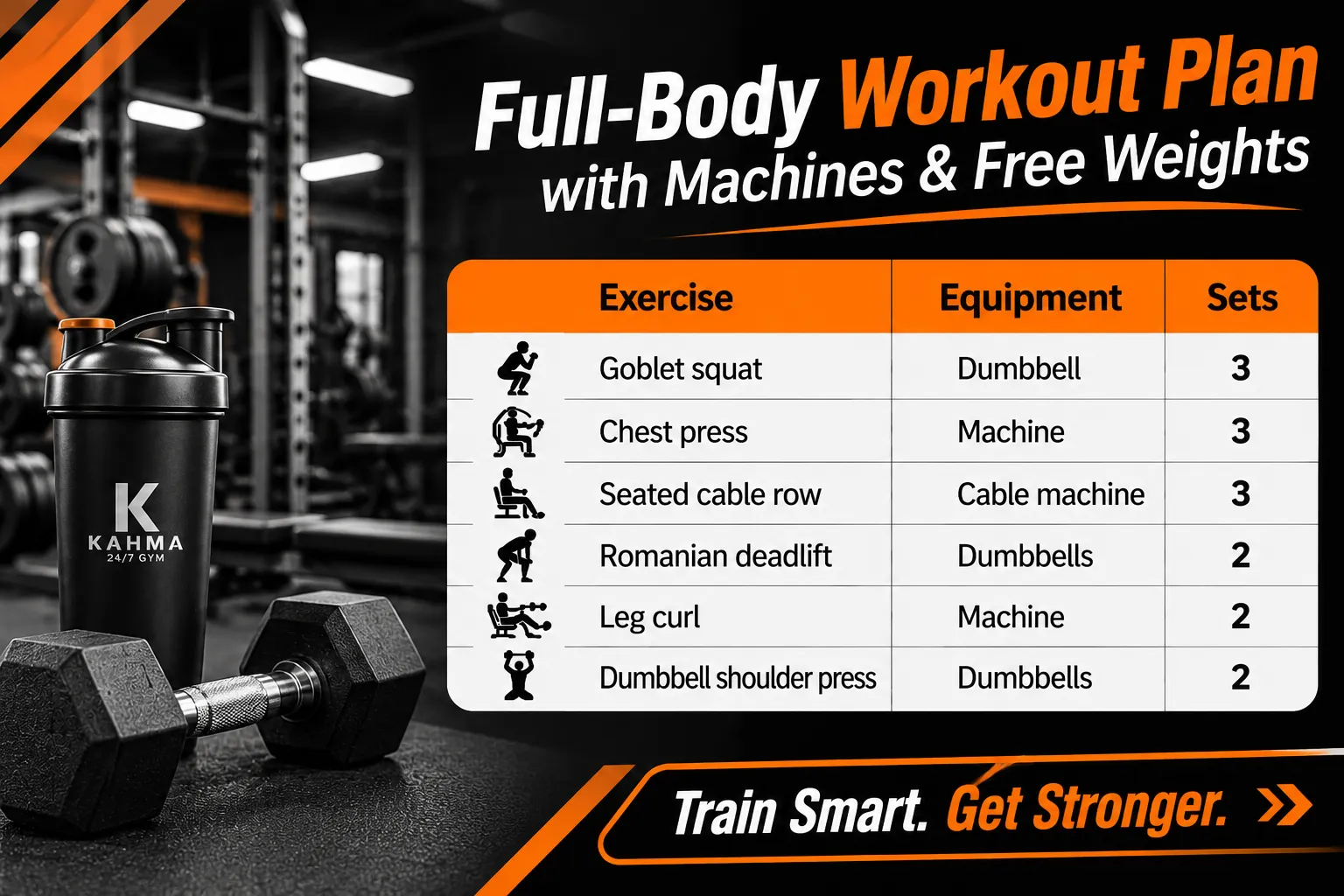
The resistance should feel manageable, and the reps should suit the lifter’s experience and goals. Think of this as a starting point, not a plan everyone has to follow. The exercises can change with training level, the equipment available and how well the body is recovering. For more upper body ideas, the weight training Truganina class page is worth a look.
The order of exercises can change how well a session goes. As a general rule, the harder, more technical lifts come first, and the smaller accessory work follows. That said, priorities count. If one muscle group is the main focus, it can go earlier in the workout.
Progression matters just as much as the choice of equipment. Keeping a note of the weights and reps makes it easy to see what’s working. When an exercise starts to feel manageable and every planned rep stays consistent, it’s time to nudge up the weight or the reps.
The weight doesn’t have to go up every session. Regular training, good recovery and controlled technique do more for long-term results than chasing heavier loads and losing form.
Mixing equipment is a smart option for anyone following strength training Truganina programs. A good weight training plan aims for slow, steady results, using a blend of machines and dumbbells.
The best workout is the one someone can stick with as their fitness changes. Using both machines and dumbbells on the same muscles is an easy way to keep a routine interesting.
At Kahma 24/7 Gym Truganina, members can build a routine around the gym equipment Truganina offers and the training options that suit them. For anyone working towards better strength and conditioning Truganina has to offer, the focus is on learning the correct setup, picking a suitable resistance and progressing at a pace that can be kept up.
Members can also check out the gym membership options at Kahma Truganina to find a plan that fits their schedule. For another useful piece of a balanced routine, there is a guide to core exercises for better stability and strength.
There’s no need to stay loyal to one kind of equipment. Free weights are great for versatile movements, and machines are great for focused work. When each one has a clear purpose in the session, training feels more balanced, more structured and a lot more enjoyable.