
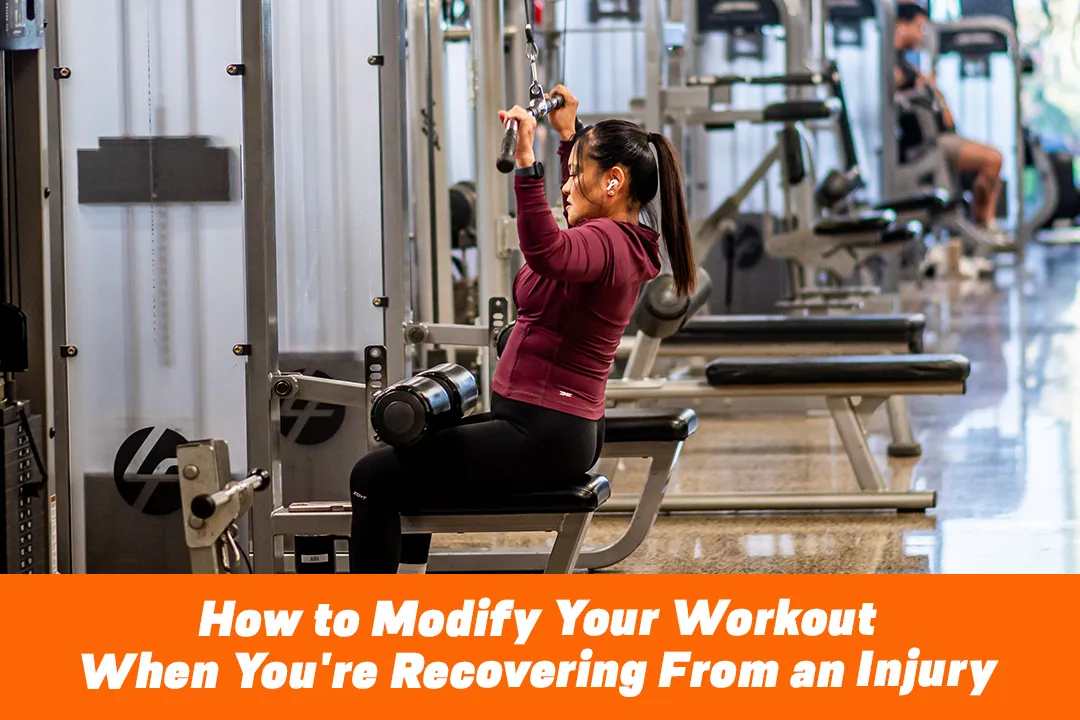
An injury can temporarily change the way you exercise, but it doesn't always mean you need to stop moving completely. Depending on the type and severity of an injury, modifying your workout may allow you to maintain some level of physical activity while giving your body the time it needs to recover.
The key is understanding that recovery should come before performance. Instead of trying to continue your usual routine at the same intensity, adapting exercises, reducing load, and choosing movements that suit your current abilities can help you stay active without unnecessarily stressing the affected area.
Before returning to exercise after an injury, it is important to understand what movements your body can currently tolerate. The appropriate approach will depend on the injury, how long you have been recovering, and advice from your doctor or qualified healthcare professional.
Avoid assuming that an exercise is safe simply because it does not feel difficult. Some movements can place stress on an injured area even when you don't immediately notice discomfort.
Once you understand your current limitations, you can make better decisions about which exercises to continue, modify, or temporarily avoid. Recovery is not the time to test how much you can push through
One of the simplest ways to modify a workout is to reduce its intensity. This could involve using lighter resistance, performing fewer repetitions, shortening the duration of a session, or taking longer breaks between exercises.
For someone who normally participates in weight training in Truganina, this might mean temporarily reducing the amount of resistance used during familiar exercises. The goal is not to maintain your previous performance level but to choose a workload that is appropriate for your current stage of recovery.
As your body becomes stronger and your healthcare professional confirms that progression is appropriate, intensity can gradually increase.
An injury may affect one particular movement or body part without preventing you from exercising other areas. Depending on the injury, you may be able to focus on exercises that place less demand on the affected region.
For example, someone recovering from a lower-body injury may need to temporarily reduce certain leg exercises while focusing on suitable upper-body or core movements. Someone with an upper-body injury might be able to maintain appropriate lower-body cardiovascular activity.
The specific exercises should always depend on the injury and professional guidance. Modifying a workout is about finding suitable alternatives rather than forcing your way through movements that your body is not ready for.
Recovery can be a useful opportunity to pay closer attention to exercise technique. When resistance and intensity are reduced, you can concentrate on controlled movement, posture, breathing, and body positioning.
Performing exercises with good technique can help you develop greater movement awareness and avoid unnecessary compensations. This is particularly useful when gradually returning to resistance training.
A structured
strength and conditioning program in Truganina can be adapted around an individual's current abilities, with exercises progressing as movement control and strength improve.
Paying attention to how your body responds during and after exercise is especially important when recovering from an injury. Increased pain, swelling, unusual weakness, or a significant change in symptoms may indicate that an activity is not appropriate at that stage of recovery.
However, it can sometimes be difficult to distinguish normal exercise sensations from symptoms related to an injury. If you are unsure, it is best to seek advice from a qualified healthcare professional rather than trying to diagnose the problem yourself.
Recovery is rarely a perfectly straight path. Some days may feel easier than others, so flexibility in your training routine is important.
Returning to your previous workout routine should be a gradual process. Once you are cleared to progress, avoid increasing several training variables at once. You might begin by increasing repetitions before adding resistance, or gradually extend the duration of a cardiovascular session.
The aim is to give your body time to adapt to each new demand. Trying to make up for lost training too quickly can place unnecessary stress on an area that is still recovering.
Even experienced gym members may need to temporarily change their approach.
Weight training sessions in Truganina can be adjusted to match your current capacity rather than your previous performance.
Modifying your workout during injury recovery is not about doing less forever. It is about training according to what your body can safely handle at the present moment.
With appropriate professional guidance, adjustments to exercise selection, resistance, duration, and intensity can help you maintain activity while working towards a gradual return to your normal routine.
The most important goal is to give your body the opportunity to recover properly. Patience, sensible progression, and appropriate exercise modifications can help you return to training with greater confidence and a stronger foundation for future workouts.