
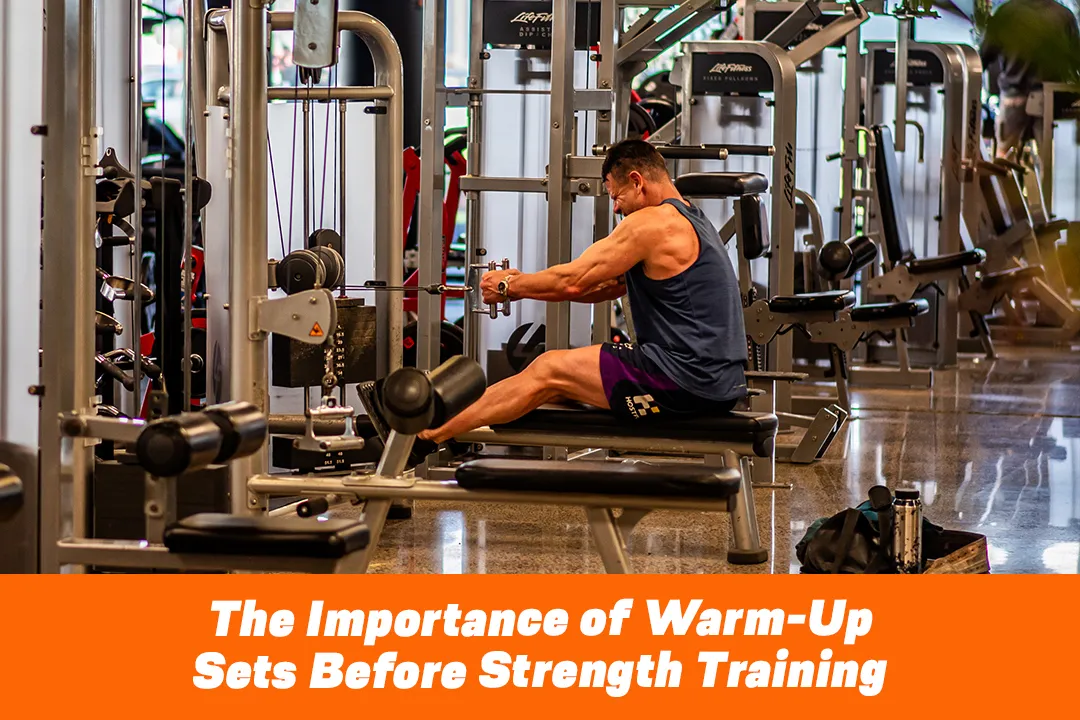
Going to the gym and immediately doing your heaviest set of repetitions might appear to be a quick way of starting, but ignoring the warm-up process could mean being unprepared for what is coming. Warm-up sets are not just lighter versions of your training. If done properly, these warm-ups can prepare you and your body for heavier sets of exercises.
Warm-up sets, in the case of someone who is into strength development or technique improvement, can provide good use in their workouts. There have also been studies that support the claim that warm-ups before resistance training can positively affect some strength and performance indicators. However, the proper technique depends on the exercise being done.
A warm-up set is a lighter set of the exercise you are about to perform. For example, before working sets of barbell squats, you might begin with an unloaded bar or a lighter weight and gradually increase the resistance.
The purpose is not to fatigue the muscles. Instead, warm-up sets allow you to rehearse the movement while gradually preparing for the demands of your working sets.
This is particularly useful for compound movements such as squats, deadlifts, bench presses, and overhead presses, where technique, coordination, and load management all matter.
Moving progressively from lighter resistance to your working weight gives your body an opportunity to adapt to the upcoming demand. A general warm-up can raise body temperature and heart rate, while exercise-specific sets allow you to practice the exact movement you are about to perform.
Evidence on resistance training shows that specific warm-ups can influence strength performance, with recent research finding improvements in measures such as lifting velocity, total repetitions, and strength under certain conditions. However, warm-up responses are not identical for everyone or every exercise.
This makes gradual preparation particularly useful when training with challenging weights.
Lifting heavy weights involves more than just muscles. Proper technique calls for proper coordination, positioning, and movement.
With lighter warm-up sets, you have an opportunity to test yourself in relation to the exercise before lifting heavier. You might realize that your positioning should be improved, or you feel a different movement from what you are used to.
Such kind of information becomes even more valuable when your objective is
strength and conditioning in Truganina, where each training session can combine strength exercises with other types of fitness activities.
In that case, warm-up sets serve as a way of checking your technique.
There is no universal formula for an effective warm-up workout. The number of sets and load volume depends on the type of exercise, experience, working load, and the nature of the entire session.
The approach for performing a difficult, complex exercise might look like this:
For instance, if an athlete is going to squat at a challenging working weight, he may start with lighter sets prior to reaching his working load. The specific values should be changed depending on the level of experience and preparedness for a particular day.
The main idea is to prepare yourself and not to pre-exhaust. Overworking yourself with warm-up sets will decrease the effectiveness of the working sets.
raising body temperature and preparing for exercise. However, this does not necessarily replace exercise-specific warm-up sets.
Someone focusing on
cardio fitness in Truganina may use a gradual increase in intensity before running or cycling. A person preparing for heavy resistance training needs additional preparation that reflects the movement and load they are about to perform.
For many gym sessions, combining a short general warm-up with specific warm-up sets provides a practical approach. The exact balance depends on the workout, environment, training experience, and individual needs.
The warm-up sets might only take a few additional minutes, but they will help you make a more controlled and thoughtful shift into your workout regime. You can use them for refining technique, understanding your body’s condition, and making your way towards heavier loads.
This becomes particularly helpful if you work with a personal trainer who can assist you in choosing the right exercises, proper warm-up process, technique, and loading according to your needs and experience.
Do not forget that your warm-up is not supposed to tire you out and to bring any pain. In case you have an injury, some sort of pain, or a health issue, as well as in case you want to return to exercise after a break, consult professionals first.
Whether you are new to resistance training or already lifting regularly, treating warm-up sets as part of the workout—not wasted time—can help you approach your training with greater preparation and control. A smarter warm-up can be a simple step toward more consistent and productive sessions at your local Truganina gym.