
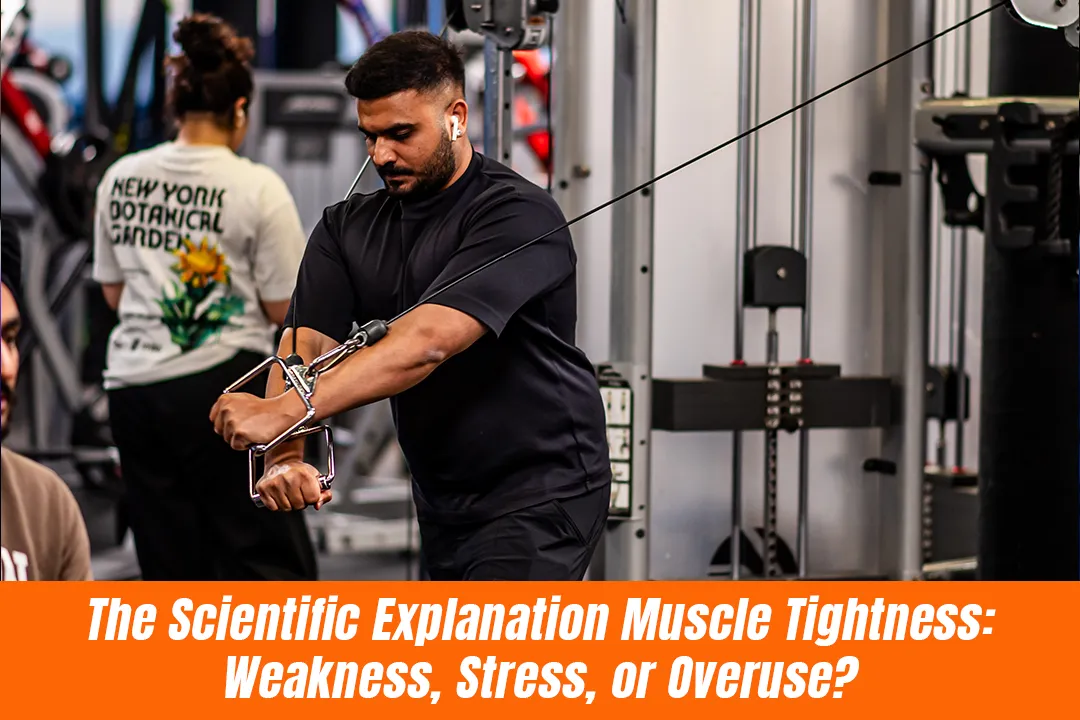
Muscle stiffness is one of the commonest ailments that nearly all people have experienced at least once — a gym addict, a desk worker, or a person coming back to the gym after a long hiatus. The big question, however, is: What does muscle stiffness really indicate? The muscle may be weak, stressed, overworked or there could be another reason entirely?
In order to give the body better mobility, performance, and comfort, one has to take a close look at the science behind muscle tightness. At places like Kahma 24/7, which is one of the best Fitness Centers in Truganina, a lot of members ask why some parts of their body feel like they are not moving freely even if they do regular workouts. The solution is not always as easy as just doing more stretching.
In our post, we expose the true triggers of muscle tightness — with the help of science — and the proper technique to tackle it.
A muscle that is tight is not necessarily a “short” muscle as many people think. In most instances, tightness is predominantly a protective response mechanism of the nervous system. Your brain may perceive instability, tiredness, or a possible threat, and it consequently keeps some muscles contracted, as a protective action. This implies that muscle tightness is often more related to neuromuscular tension than to the actual muscle length.
Common sensations include:
Temporary relief after stretching, but tightness returns quickly
Understanding whether the tightness comes from weakness, stress, or overuse can help you fix the root cause instead of treating the symptoms.
One of the most misunderstood causes of tightness is muscle weakness. When a muscle lacks strength or stability, the nervous system increases tension as a form of support.
For example:
This is why stretching alone rarely solves chronic tightness — you stretch the muscle, feel relief for 20 minutes, then it tightens again. The underlying weakness hasn’t been addressed.
At facilities like a Women’s Gym Truganina, trainers often help members identify weak areas through posture assessments and corrective exercises. Strengthening these areas leads to long-term improvement instead of temporary fixes.
Stress isn’t only emotional — it has a physical effect on the muscles. When you’re stressed, anxious, or mentally overwhelmed, the body enters a mild “fight or flight” state. In response, the nervous system increases muscle tension, especially in areas like:
This is why people who spend long hours at work or deal with daily pressure often feel tightness even if they don’t exercise frequently.
Stress-related tightness may also show up as:
The solution? A combination of mobility work, breathing exercises, and moderate-intensity training. Many members at a Fitness Center in Truganina report that even light workouts help reduce stress-related tightness significantly.
Overuse tightness happens when a muscle is asked to do the same movement repeatedly without adequate rest. This doesn’t only apply to athletes — even daily routines can cause overuse.
Examples include:
Overuse tightness occurs because the muscle is fatigued and stays tense to protect itself from injury. This type of tension often improves with rest, light stretching, and mobility.
Stretching can certainly help reduce discomfort, increase blood flow, and improve flexibility. But when tightness is caused by weakness or stress, stretching alone offers only temporary relief.
A complete solution often requires a combination of:
This is why programs that combine strength and mobility — like those offered at structured group sessions or personal training — tend to produce long-lasting results.
The following are scientifically supported methods for relaxing and enhancing the quality of movement:
A. Developing the Competing Muscles
When your hamstrings are tight, work on your glutes.
In case your neck has tightness, then your upper back should be your focus.
B. Improve the Way You Move Daily
Do something small such as standing up from your chair every once in a while, keeping a good posture, or changing your sitting position; it will all have a positive impact.
C. Control Stress
Breath control, mindfulness, or workouts at a moderate pace can all help reduce the tension in the nervous system.
D. Warm-Up Properly
Dynamic warm-ups are done to prepare muscles so they are not tight during the workout.
E. Strength and Mobility Training at the Same Time
Getting the right amount of both gives the long-term benefits.
Muscle tightness doesn’t always mean that stretching is needed. It might indicate that the body is under stress, overworked treating or even has insufficient strength in certain areas. Knowing the reason allows you to treat the root cause of the problem instead of seeking temporary relief.
The positive aspect? With the help of the correct combination of activity, strengthening, and recovery most of the muscle tightness cases become significantly better. Whether training at a
Women's Gym Truganina or a full
Fitness Center in Truganina, the emphasis on balanced training and mindful recovery will make you move better, feel better, and be able to perform at your highest level.